Our story
Play therapists kept asking. So we made one.
Brandy’s BOA began with a problem I heard about almost every week while working at the Center for Play Therapy at the University of North Texas. Every playroom was supposed to have a bop bag, and there was nowhere left to buy a good one.
The phone calls
I came to UNT from California’s Central Coast to study play therapy. At the time, UNT offered six play therapy courses, and the next-closest program had two. I met Dr. Garry Landreth on a Friday visit that turned, without warning, into my interview. I stayed for my master’s degree and my PhD, and he chaired my dissertation as his 69th and final doctoral student.
While I was a student, I worked at the Center for Play Therapy, first as a volunteer, then on the front desk, and later as Assistant Director. Part of my job was answering the phone, and the same call kept coming in:
“Dr. Landreth says a bop bag is a necessary item for the playroom. Where do we get one?”
The honest answer was that we didn’t know. The company that used to make them had stopped. So I called my dad and told him, “There’s a need in this field, and nobody’s meeting it.” It was never a plan to start a business. It was a way to give play therapists an answer.
Fixing what kept failing
When we looked into it, the casing was never the problem. The inner bladder was. The previous maker was a gymnastics company, and its bladders popped so often that returns made the product not worth keeping.
My dad was a civilian working on a military base. He tracked down the manufacturer that made inflatable life vests for the Navy SEALs, and we originally consulted with them to design a bladder that could take a playroom’s worth of use. Our suppliers have changed over the years. I borrowed a few thousand dollars from him to get started, and for years he was my only, unpaid, employee. We sold our first BOA in 2000. Neither of us imagined we’d still be making them more than 25 years later.
There was one funny wrinkle. Because I was a student and worked at the Center, the Center couldn’t sell my bags. They counted as my intellectual property, a conflict of interest. (I did find it a little insulting that my intellectual property was a bag of air.) Today the Center is one of our wholesale partners.
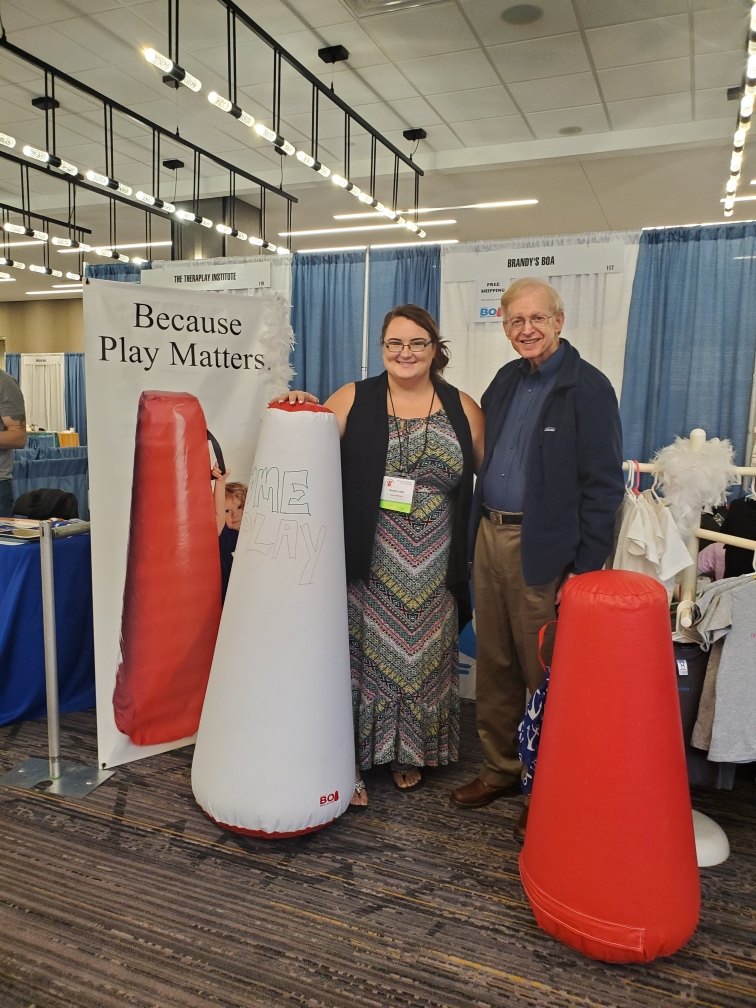
Why sturdy matters in the playroom
Durability isn’t about how hard a child can hit. In play, children can undo what they’ve done. A character can be defeated and come back to life, as long as the story stays in fantasy. A bop bag that deflates breaks that. A child who knocks the BOA down can watch it rise again, or keep it down, or climb on it, or curl up against it for a break. The choice stays theirs.
Children use it in ways no one designed for. The carrying handle becomes an arm, a sword holder, a place to tie a costume. I’ve spent sessions sitting on the back of a BOA with a child, “flying through space” while we searched for the balance point where neither of our feet touched the floor, and talked the whole time.
Where the name came from
Everyone knew the toy as “Bobo,” so I wanted to keep the B. Brandy’s Bag of Air became Brandy’s BOA. For a while people heard “boa” and pictured a snake or a feather boa, and honestly, that was part of the fun.
In memory of Dr. Garry Landreth
Garry L. Landreth, Ed.D., LPC, RPT-S™ · Regents Professor and former Director, Center for Play Therapy, University of North Texas
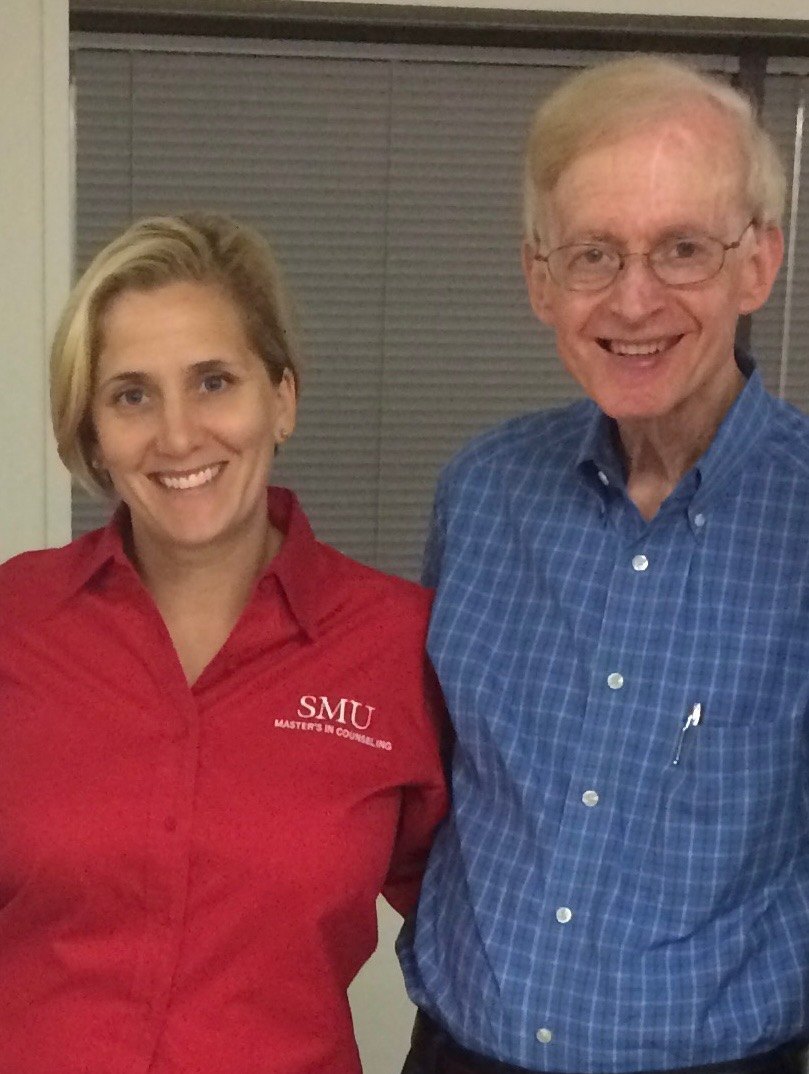
Garry Landreth gave his guidance and knowledge to the development of the BOA, and he was the reason so many play therapists knew they needed one.
I am the counselor, teacher, supervisor, speaker, parent and person I am today largely because of Garry’s influence. He taught me so many lessons, not only about counseling, but about teaching, presenting, listening and truly seeing children. I could listen to him tell stories for hours. I’ve heard some of them so many times that my brain occasionally forgets they were his stories before they became part of mine.
After completing my master’s degree under his mentorship, I went straight into the PhD program to keep studying with him. He agreed that if I made that commitment, he would chair my dissertation as his final doctoral student: lucky number 69. Garry liked to joke that after working with me, he decided he didn’t want to do it anymore.
He taught me how to watch an audience, how to engage a classroom, and how to communicate with genuine immediacy. Most importantly, he taught me to notice the child leaning against the tree. Every child deserves to be seen and accepted.
Every summer I supervise the UNT Summer Intensive group, as I have year after year since first doing it under his supervision. So much of what I bring to it traces directly back to him.
His impact reaches far beyond those of us who knew him personally. It lives on in the counselors he trained, the children they serve, the students they teach, and the generations who will never know his name but will benefit from his work.
Birds fly. Fish swim. And we all play on because of you. Thank you, Garry.
Brandy today
Brandy Schumann, PhD, LPC-S, NCC, RPT-S™, CCPT-S, CPRT-S
Brandy is a Clinical Professor at Southern Methodist University (SMU), where she teaches play therapy. She is also a practicing play therapist and supervisor: a Registered Play Therapist-Supervisor, a Certified Child-Centered Play Therapy Supervisor and a Certified Child-Parent Relationship Therapy Supervisor.
She trained under Dr. Garry Landreth and served as Assistant Director of the University of North Texas Center for Play Therapy. Her dissertation compared child-centered play therapy with a school guidance program for children with aggressive behavior. She chose that topic instead of studying the bop bag itself, because research on her own product could never be fully free of bias.
Brandy’s BOA is still a small, therapist-run business. When you email us, a person who knows the playroom writes back.
Hear the story in Brandy’s own words on the Play Therapy Podcast with Dr. Brenna Hicks, episode #156.