Therapeutic use
More than a punching bag.
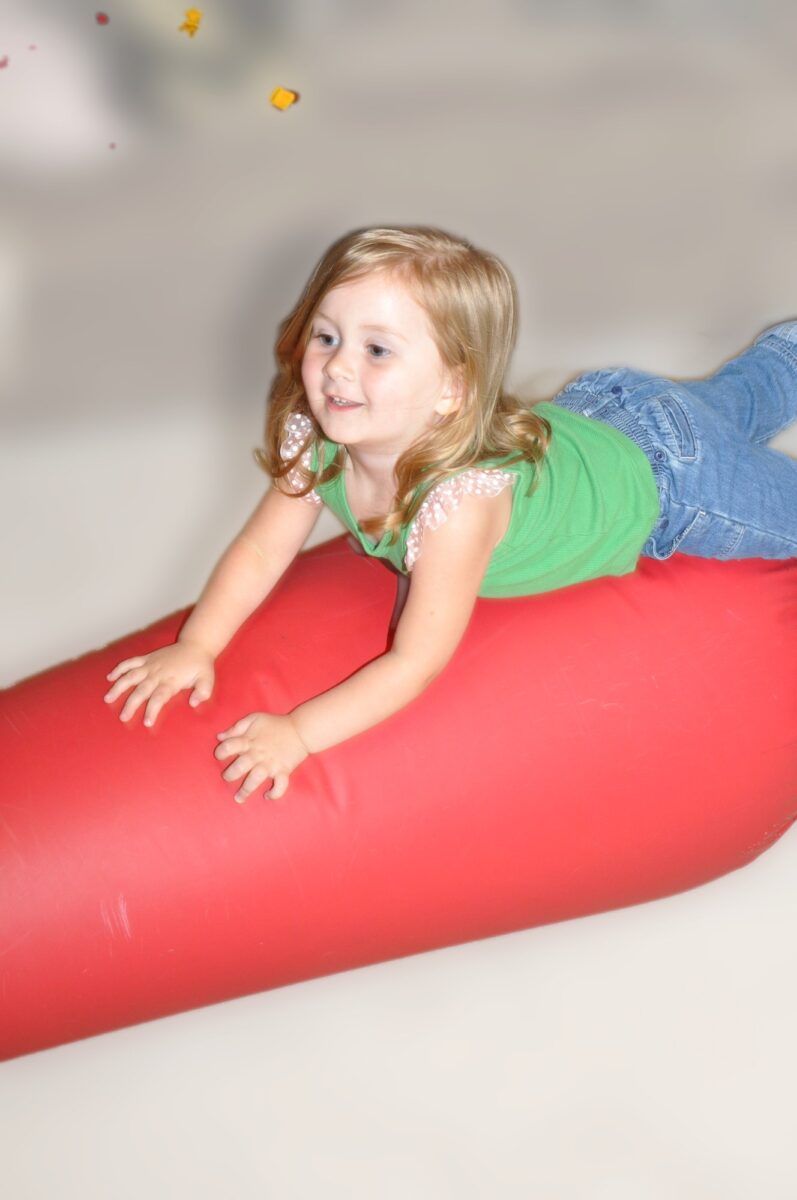
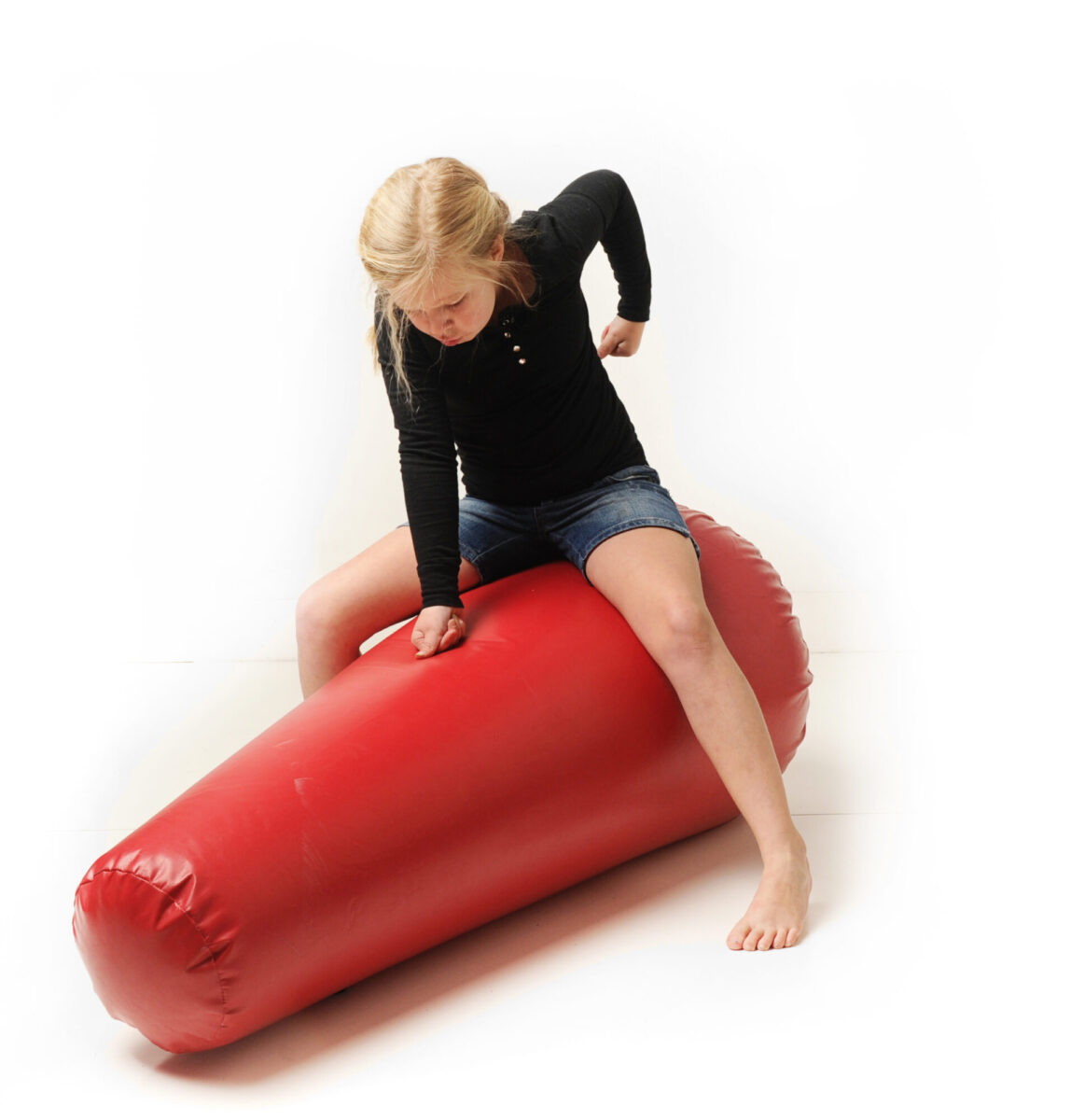
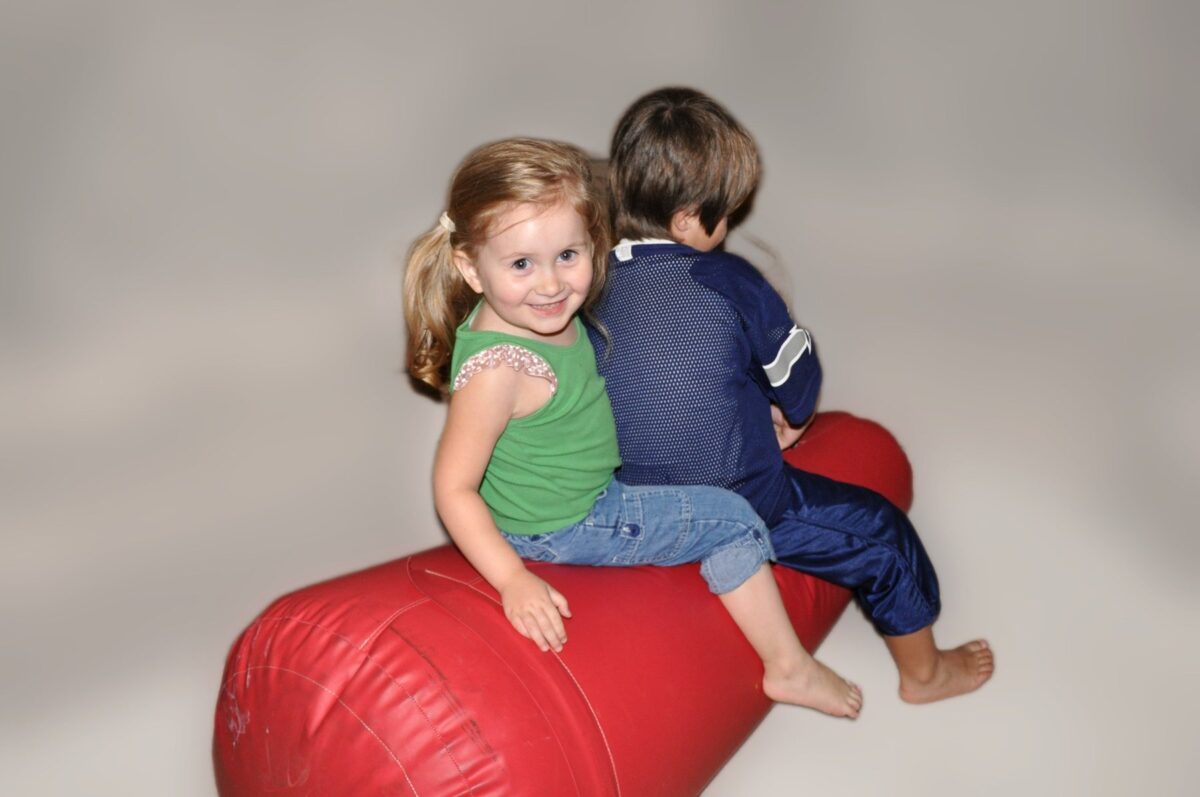
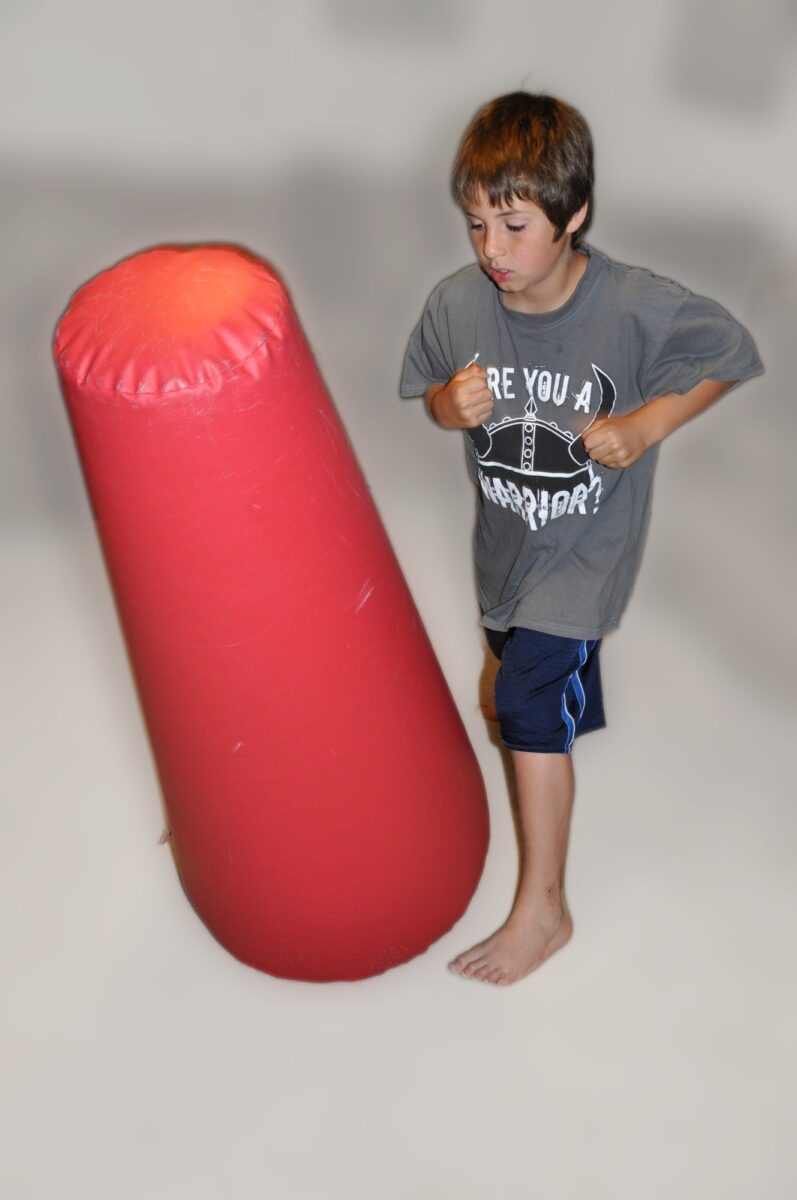
In the playroom, children decide what the BOA is. It can be a patient, a friend, a horse, a pillow or something to push against. That range is what makes it useful to play therapists.
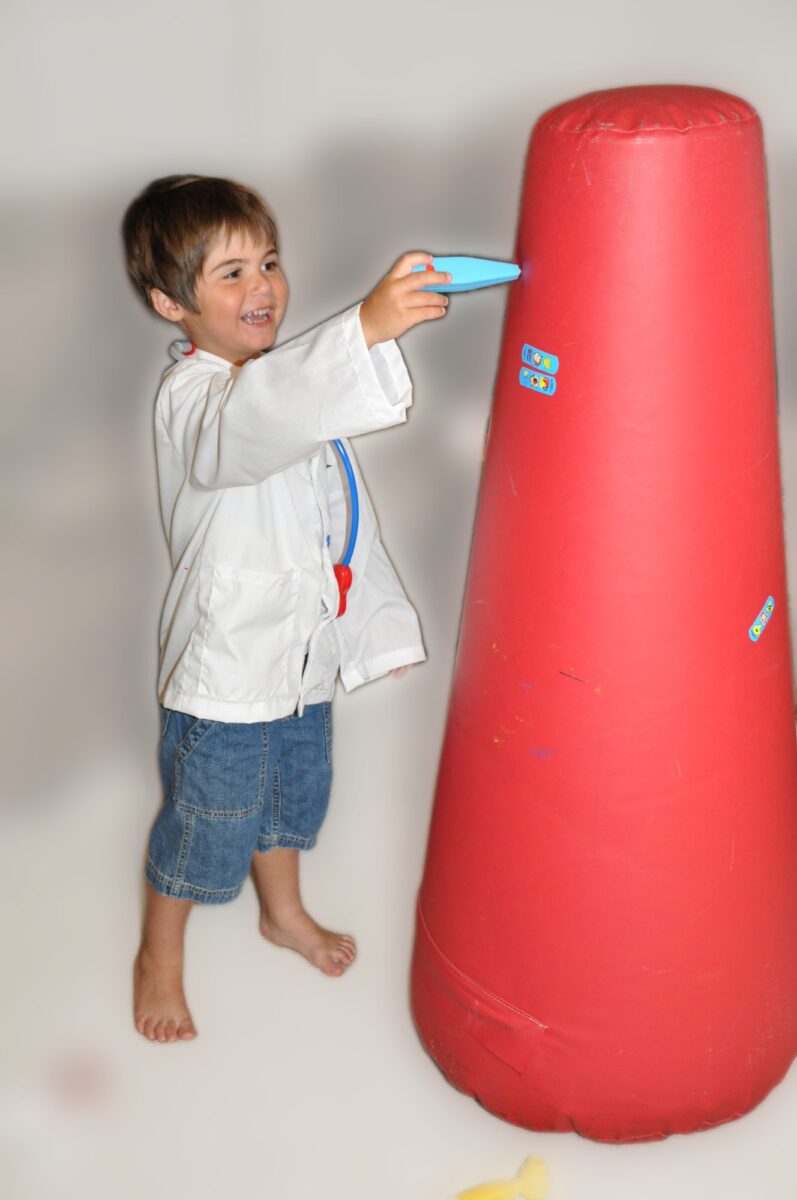
What children do with it
These are real children playing with a real BOA. They aren’t steps or stages, and no one use matters more than another. In older photos we’ve softened the room behind the child; the children and the BOA are unchanged.
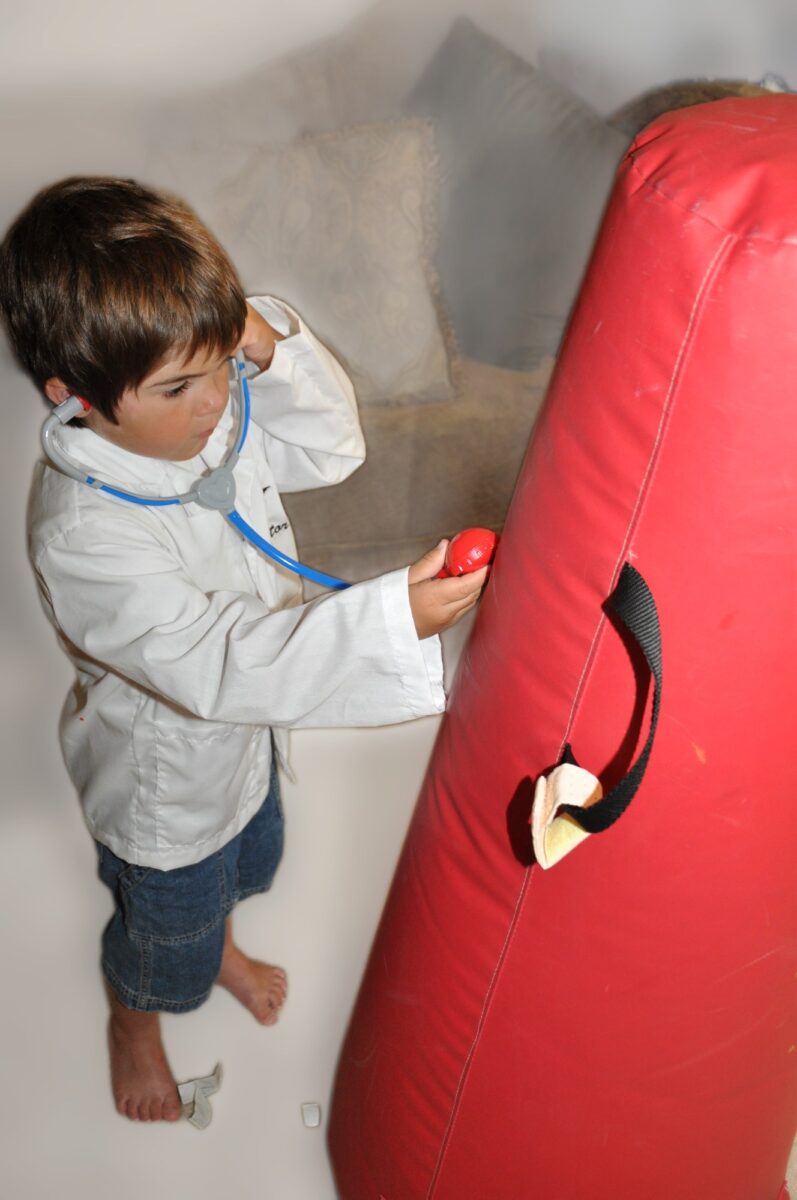
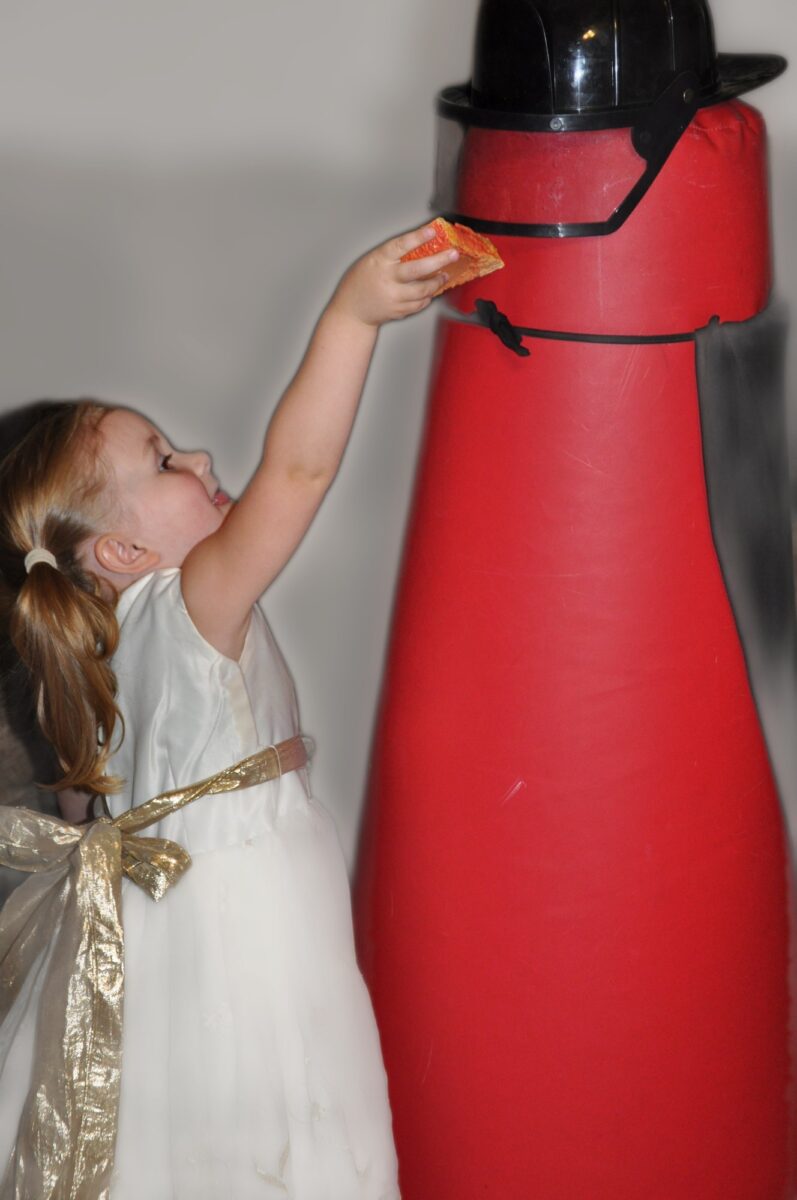
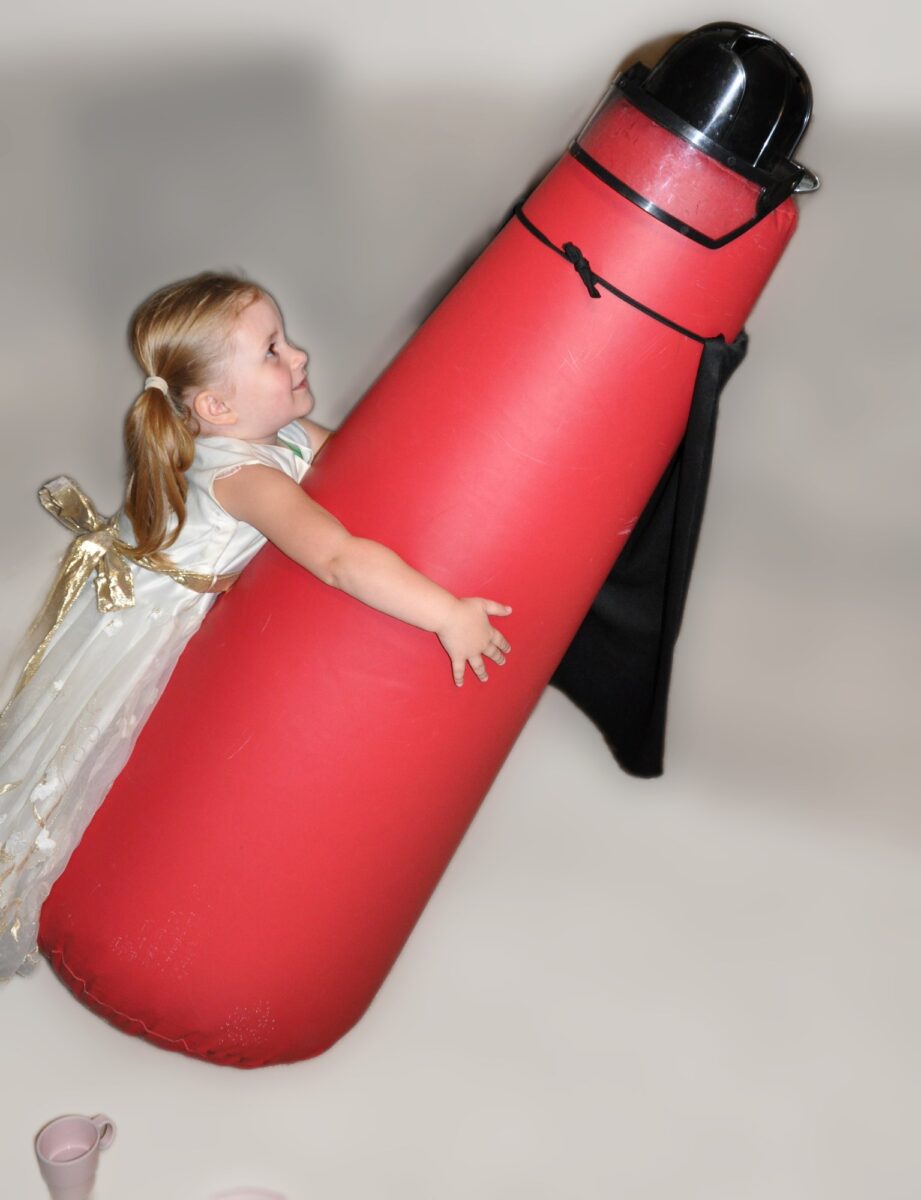
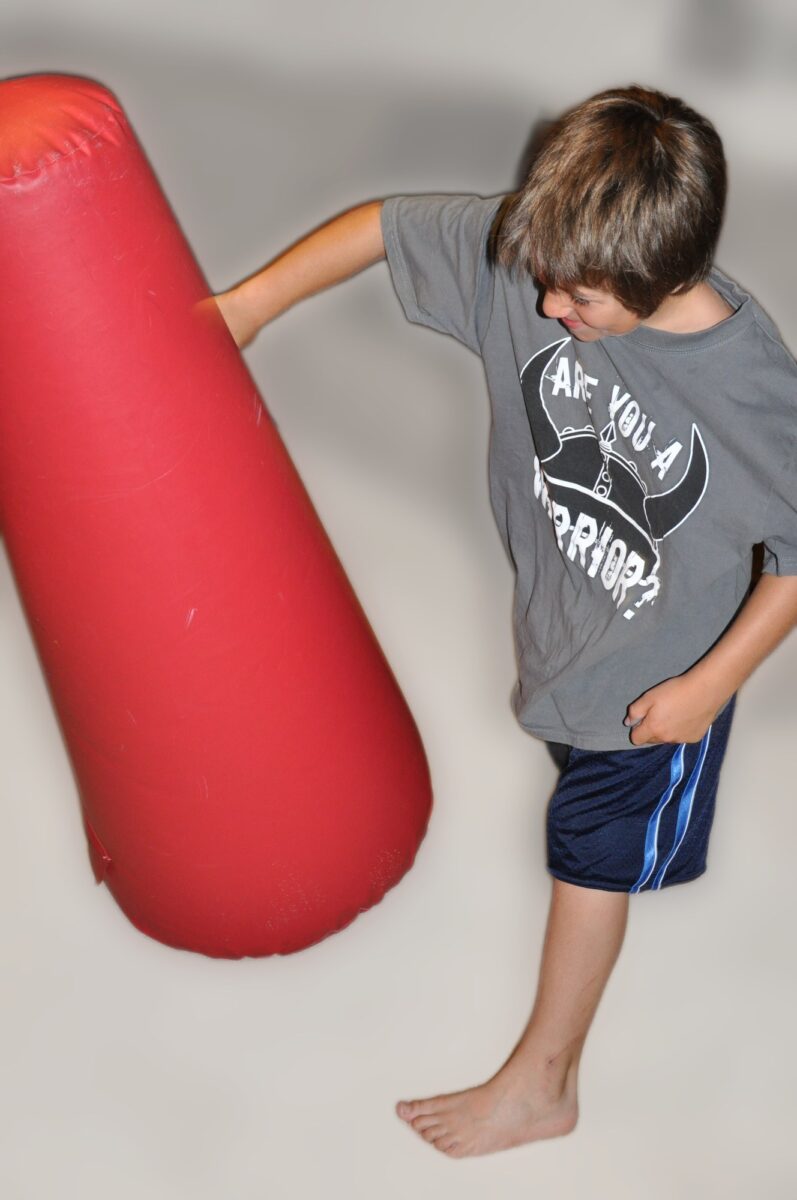
Stories from the playroom
Play therapists have shared some of the ways their clients have played with the BOA. Details are kept general to protect each child’s privacy.
“I had a client slide a foam sword through the handle on Bobo, then fought it! My client, of course, kept the hard plastic “powerful” sword for himself.”
“My 4-year-old client walked into the playroom, grazed his shoulder against the bop bag and said, “You want a piece of me?””
“My client “hid” behind Bobo, asking me to walk around it in circles on my knees, all the while staying “hidden” during a repetitive game of hide and seek.”
“My client attached two bungee cords to the handle and then to two different places in the room. The Bobo and bungee cords became a slingshot and launch pad for toys to be shot across the room!”
“I had a client jam the top of the Bobo into the shelves and then use it as a slide!”
“I have had several clients create a fortress using the bop bag as protection during Nerf gun wars!”
“In one session my 6-year-old client decided the Bobo was a surfboard, a high wire, a good guy, a bad guy, a dinner companion and, lastly, his best friend.”
“One 5-year-old client decided that the Bobo was my new boyfriend. I had to hug and kiss the Bobo on the cheek!”

“I also have children go on to use the bop-bag as a horse, a friendly figure, a mountain to climb, a creative option for nurturing and soothing behavior.”Linda E. Homeyer, PhD, LPC-S, RPT-S™
What makes it therapeutic
A bop bag doesn’t treat anything on its own. What matters is the trained therapist in the room and the relationship with the child.
The child leads
In child-centered play therapy, the therapist doesn’t tell a child to hit the BOA or to be gentle with it. The child chooses, and the therapist responds to what the child seems to be feeling.
Feelings are welcome
Children can show sadness, tenderness, fear, power and anger with the same toy. A therapist who stays calm and accepting helps a child notice and name what they feel.
Limits keep play safe
In Garry Landreth’s ACT model, a therapist acknowledges the feeling, communicates the limit and targets an acceptable alternative. When a child wants to hit a person, the BOA is often that alternative.
A note on aggression
We don’t claim it “releases” anger
Some people worry that a bop bag teaches children to hit, and some clinicians leave it out of their playrooms. Research on venting anger has found that hitting things doesn’t simply drain anger away (Bushman, 2002).
In play therapy the aim isn’t release for its own sake. It’s helping a child experience a feeling, understand it and manage it with an adult who understands. Experienced play therapists also report that many children never use the BOA aggressively at all.
In your playroom
Setting it up
- Choose a sizeIf you have the room, choose the 48-inch. It suits children 8 and up, gives little ones something bigger than them to take down, and is long enough for a child to flop across. The 36-inch is a good choice when floor space is tight.
- Give it spacePlace it where it can rock freely, away from shelves, windows and sharp corners.
- Weight the baseAdd about 10–12 lb of sand (not included) to the pouch sewn into the base. More sand makes it pop back up faster.
- Try the erasable white BOAChildren can draw faces, feelings or words with dry-erase markers, then wipe it clean for the next session.
Who uses Brandy’s BOA
In private practice and agency playrooms.
The University of North Texas Center for Play Therapy is a current wholesale partner.
School counselors and social workers.
Parents who want a sturdy, safe toy for active and imaginative play.
Equipping a clinic or school?
Buying 5 or more BOAs? 10% off is applied automatically in your cart. For a whole clinic, school or district, contact us for a quote.
Sources
Bushman, B. J. (2002). Does venting anger feed or extinguish the flame? Catharsis, rumination, distraction, anger, and aggressive responding. Personality and Social Psychology Bulletin, 28(6), 724–731. doi.org/10.1177/0146167202289002
Landreth, G. L. Play Therapy: The Art of the Relationship. Routledge.
Trotter, K., Eshelman, D., & Landreth, G. (2003). A place for Bobo in play therapy. International Journal of Play Therapy, 12(1), 117–139. doi.org/10.1037/h0088875